
How the Grant Parish Court Calendar Works
The 35th Judicial District Court docket page is Grant Parish's main official calendar route. It links a current docket PDF listing court dates and setting labels. Sessions generally begin at 9:00 a.m., the court says, unless stated otherwise. Treat the published schedule as a planning source only. The court notes it can change without notice. It does not serve as official notice of an appearance.
The calendar covers a wide range of setting types. Settings on the calendar include Criminal Court, Juvenile Court, Criminal Jury Week, Traffic and Misdemeanor Probation Revocation, Civil Court, Arraignment, Grand Jury, and Child Support. A single line may hold a date, a case number, or a caption. That is not a full case history. The court's Clerk and minute systems preserve the record once a proceeding happens.
Grant Parish Court Calendar PDF
Open the current docket PDF. Search first for the case number. Then search for a party caption. PDF captions often use abbreviated names or odd punctuation, so both searches may help. Write down the date and setting label listed with the case. If the PDF gives no room, judge, or individual time, call the court before you travel.
The Grant Parish court calendar offers no public search field beyond the PDF. The clerk posts no historical calendar database, text alerts, or complete daily printed calendar. Call the court's scheduling contact if the PDF falls short. The Grant Parish Clerk's records route is another option.
The 35th JDC local-rules page appears in this Grant Parish court calendar image.
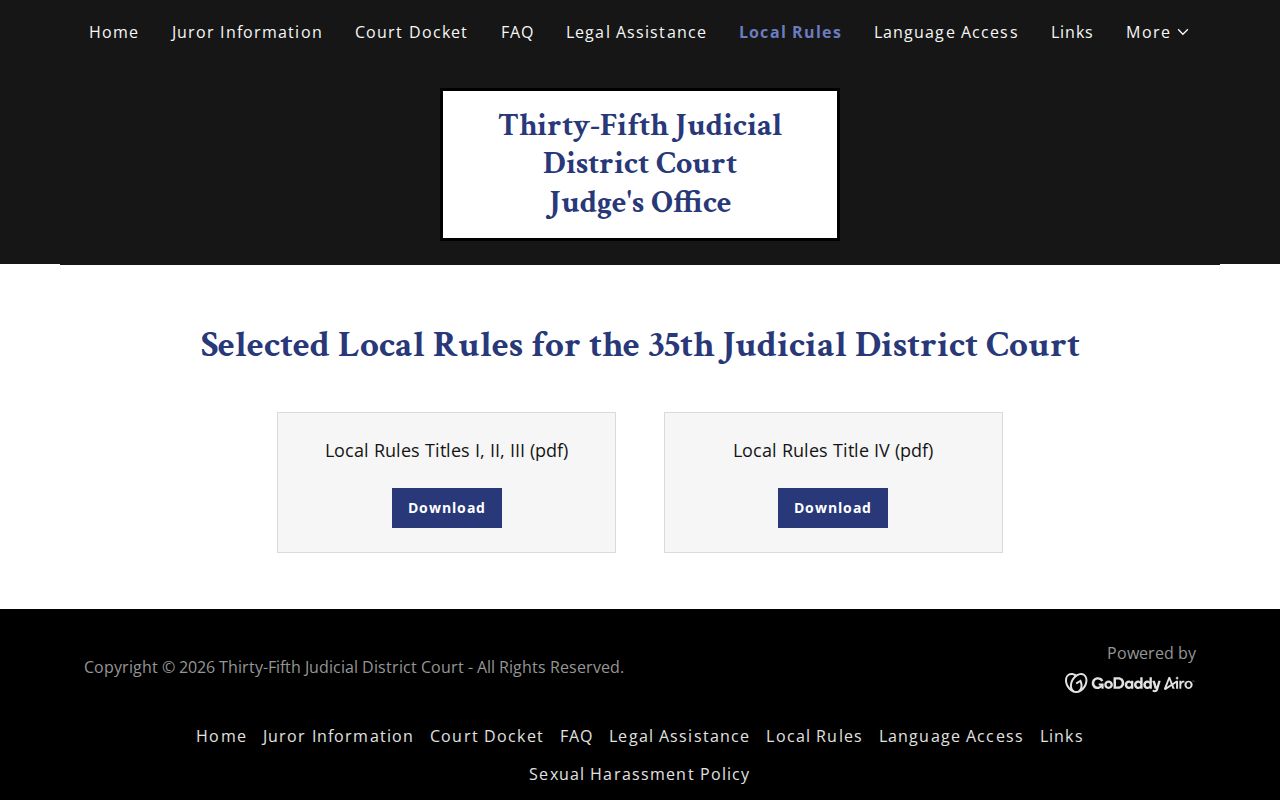
Local rules and docket links live on the official site, and the court updates its current materials from time to time. Check the official source before relying on any link or rule.
Grant Parish Court Date Lookups
Pick the channel that fits your question. The current 35th JDC docket PDF is the online calendar source. For courtroom scheduling, judicial-administrator matters, Zoom, ADA, interpreter, and procedural-access questions, call the court. The Grant Parish Clerk of Court handles copies, minutes, and record requests. Visit the Clerk in person after calling. Ask about the record you want and the counter procedure.
The eClerks criminal search covers a qualifying criminal case. Statewide and parish eClerks tools can help locate supported civil indexes. None of them replaces the current official calendar. Grant Parish publishes no stable public civil, criminal, or traffic calendar form. For a town citation, use the court printed on the citation. Do not treat the district-court PDF as universal.
- Check the official 35th JDC docket page and linked PDF.
- Search the PDF by case number, then by caption or party style.
- Write down the date and setting type, not just a nearby name.
- Confirm the date, courtroom, Zoom authorization, and appearance duty with the court or counsel.
- Ask the Clerk for a dated minute entry when the question concerns a past event.
Court Settings: What Each Field Means
A setting is a scheduled court event. It is not always a trial date. A calendar row can also omit details that need a direct confirmation from the court. The fields here reflect what the official docket materials describe, plus the practical questions a caller should ask when a field is missing.
| Date | The day listed for the setting, subject to change by the court. |
|---|---|
| Setting type | For example, Criminal Court, Civil Court, Arraignment, Grand Jury, or Juvenile Court. |
| Case number | The court identifier used to find related calendar, minute, or Clerk records. |
| Caption or style | The party naming line used in civil and other listed matters. |
| Time / courtroom / judge | Confirm directly when the PDF does not provide the detail. |
The calendar points to a future appointment. A later minute entry records an outline of what the court actually did. That difference matters when asking whether a case was heard, continued, or resolved.
Grant Parish Court Calendar Terms
Reading the setting label prevents wrong assumptions. An arraignment is a plea-stage court setting. A grand-jury label describes a separate criminal-court function. Criminal Jury Week is not the same as an individual trial for every criminal case. Traffic and Misdemeanor Probation Revocation stands as its own listed setting class. Civil Court covers civil settings, though it does not guarantee that every civil record is publicly viewable.
- Setting
- A date placed on the court calendar for a specified proceeding.
- Continuance
- A court-approved move of a scheduled matter to another date.
- Reset
- A later setting replacing an earlier one.
- Minute entry
- The dated court outline of what occurred, kept through the Clerk’s minute function.
These terms describe court operations. They do not state why a case moved or what legal result followed.
When a Court Date Moves
A calendar date can move for several reasons. The court may change the setting, grant a continuance, or issue a new notice. The 35th JDC warns that online dates and schedules can change without notification. This is true even when an earlier PDF looked current. Do not assume a dismissal just because an old date disappeared, and do not read a new time or room into a generic session heading.
Confirm your obligation with the court or your counsel. A later docket PDF can help you find a rescheduled date, while a Clerk minute or order may explain a past change. Court staff can state procedural information and access steps. They cannot give legal advice on how a party should respond.
The court's official practical-access material appears in this Grant Parish court calendar image.
Practical court access guidance helps you prepare for a confirmed setting. It does not support relying on an unverified calendar date.
Missed Settings and What Comes Next
Missed a Grant Parish setting? Act fast. Call the court, your counsel if you have one, or the Clerk for that record. The right fix depends on the case type and what the court ordered. The current PDF may not show later orders. Ask for the case number, the setting date, and whether a minute entry or order exists.
Zoom is not automatic. The 35th JDC permits Zoom only with prior authorization. Its docket notice says criminal participation requires prosecutor authorization or written court approval, and an attempted Zoom appearance should not be assumed to excuse a failure to appear.
Never rely on a public calendar to enter a proceeding or to assume an accommodation request was granted. The court alone controls appearance method and access decisions in Grant Parish.
Grant Parish Calendar and Minutes
Two different questions live here. The current Grant Parish calendar answers when the next setting is listed. The Clerk's minutes answer what the court recorded after a setting. The Civil Department says a minute clerk keeps daily minutes. The Criminal Department says its minute clerks transcribe an outline of court activity. Either way, a minute is not a verbatim transcript.
For a past hearing, contact the Clerk. Give the court, the case number, an approximate date, and the exact record type you want. For a future hearing, use the current docket PDF and confirm it with the court. Treating a forward calendar as a full historical docket invites avoidable errors.
The handoffs matter in practice. The court's PDF locates a listed setting. The court office handles confirmation, appearance method, and authorization questions. The Clerk handles minutes and copies after an event. eClerks can help with qualifying criminal or supported civil records. It does not replace the current 35th JDC schedule. Keep those functions separate. It helps you ask for the right court record. Do not use an old calendar line as proof of the present date.
Access requests need their own attention. The court publishes ADA and interpreter forms for accommodations. Those are not public docket searches, and they should go through the court process in advance. Zoom likewise requires prior authorization for criminal proceedings. A listed date, a requested accommodation, and remote-appearance permission are three separate issues. Confirm each with the court.
Grant Parish Court Access Support
The 35th JDC publishes ADA and interpreter request paths. Those forms carry sensitive personal and case information. They are operational support forms rather than public docket-search forms. Send requests in advance through the court's designated process. A party can ask about the right procedure. The court still controls the final accommodation decision. The court's legal-assistance and access information lays out what the Grant Parish court offers.
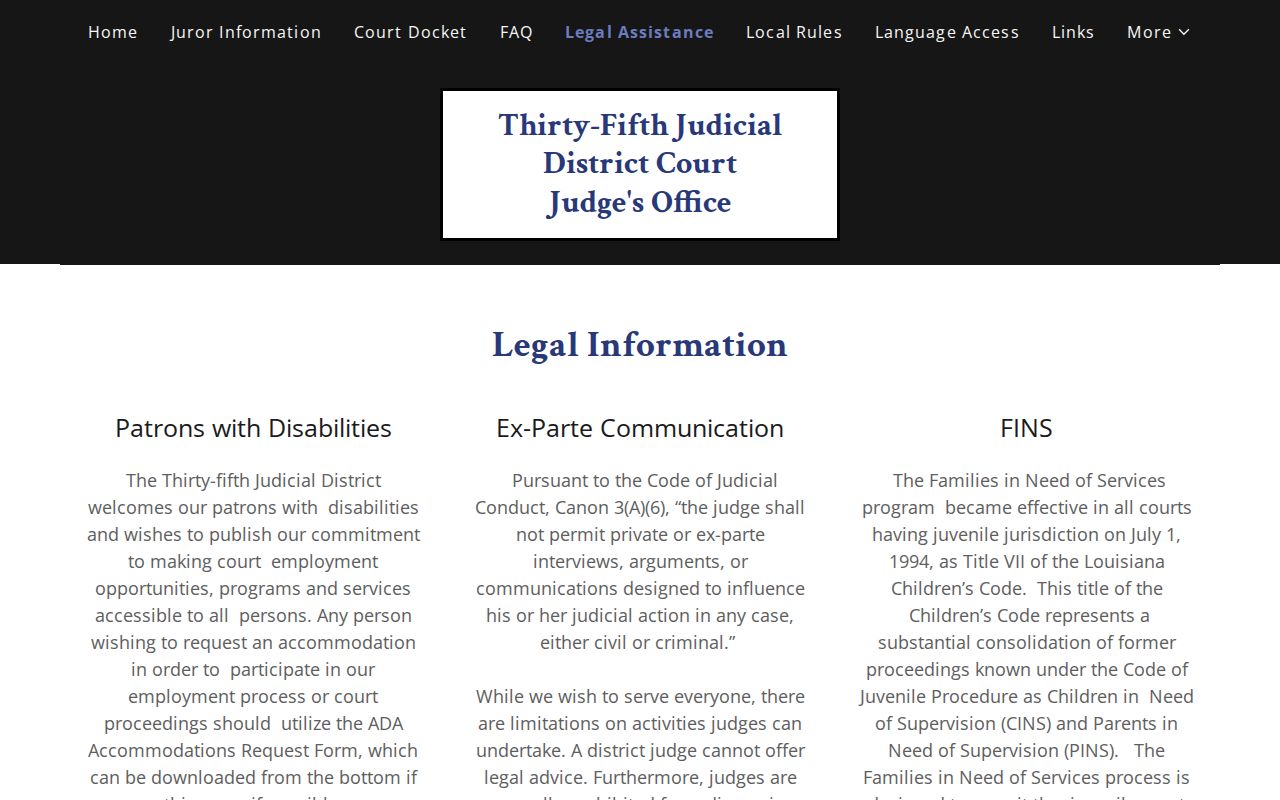
Access assistance is part of court scheduling and administration, not a public case-search result. The official language-access page describes the court's own resources for Grant Parish.
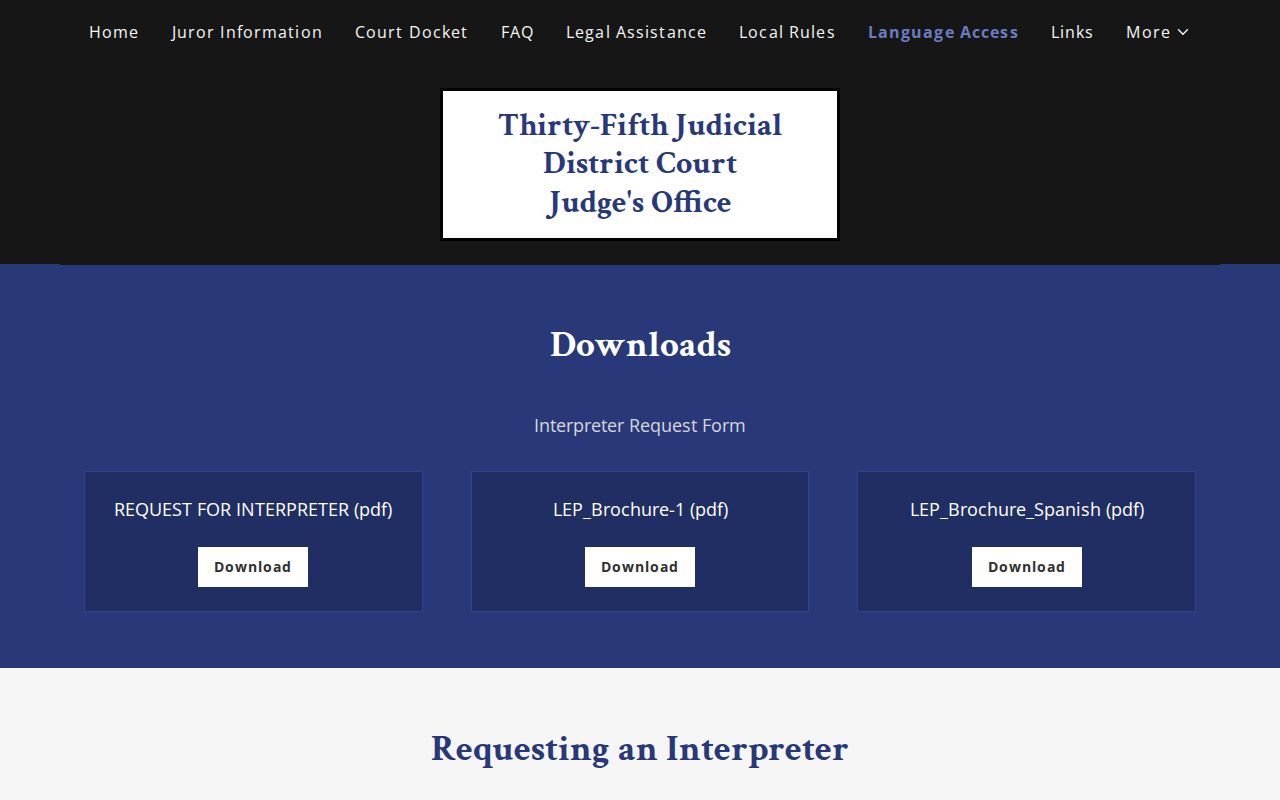
Interpreter requests draw on case and proceeding information, letting the court settle access needs before a hearing date is set.
Grant Parish Court Calendar Preparation
Bring the case number and your notice. Come with questions about the setting's date, time, location, or required appearance method. Court security guidance covers screening plus limits on recording devices and disruptive items. Call before you travel if you plan to request a record or an accommodation. The court guarantees no public-terminal room or fixed counter process for every file type. The 35th JDC self-help resource explains what the court makes available for Grant Parish visitors.
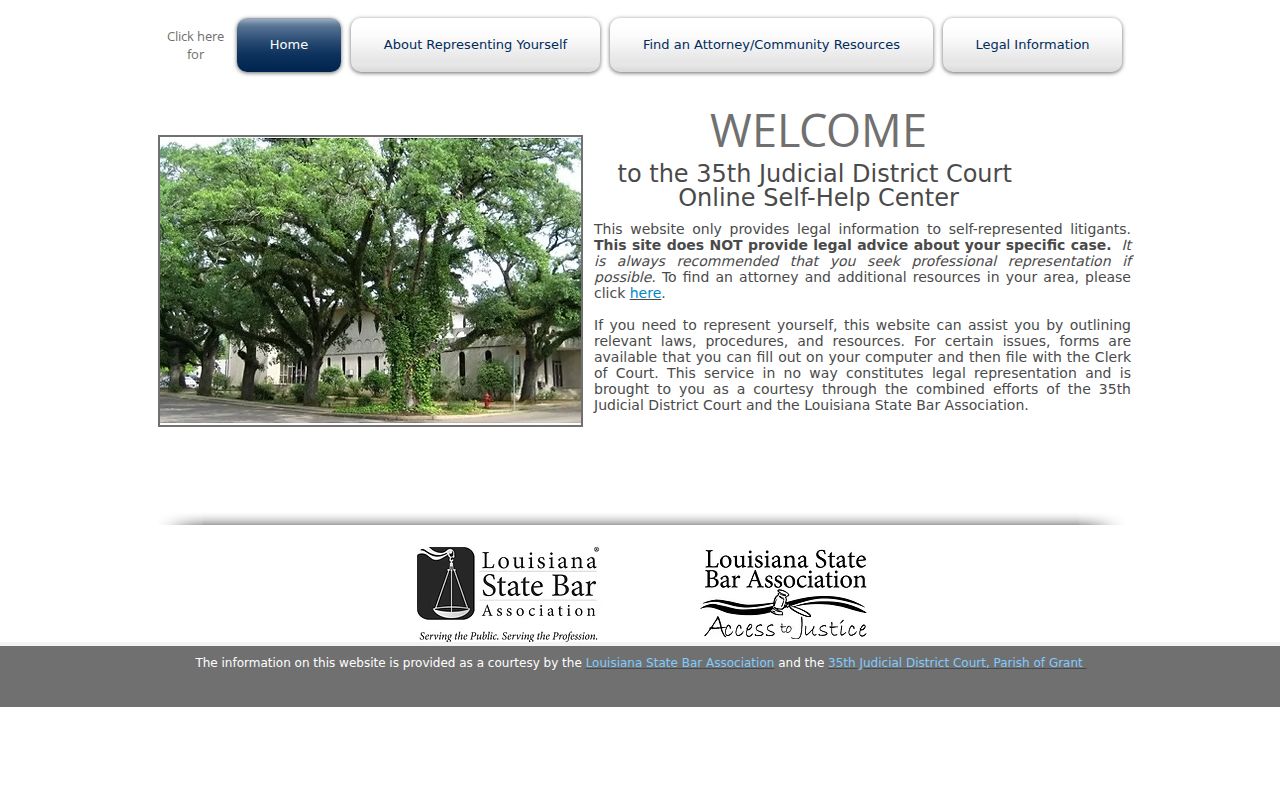
Self-help materials can explain court process, but the court or Clerk remains the source for a specific Grant Parish setting and record.