
Grant Parish Court Record Requests
For anything filed in the 35th Judicial District Court, start with the Grant Parish Clerk of Court. Louisiana Code of Civil Procedure Art. 251 makes the Clerk the custodian of district-court records. Its published contact information lists a Colfax office and a phone route. The Clerk posts no dedicated request form. There is no fixed turnaround promise, and no single email procedure covers every record type.
Call first. Ask which department holds the file. Ask whether that record should go by mail, fax, email, or a counter visit. A trip to the office works best once you have confirmed the record is there and how copies are handled. If the Clerk directs you to mail, use the published postal address. Until the office confirms otherwise, treat a message sent to a general inbox as unaccepted.
- Name the 35th JDC department and the court record sought.
- Give the case, citation, instrument, or docket number if known.
- Call the Clerk for current copy, certification, research, and delivery instructions.
- Use eClerks online tools to identify supported records, not to replace the custodian.
- Keep the Clerk’s response and any payment instructions with the request.
Grant Parish Court Record Custodians
Every department in the Grant Parish Clerk's office keeps its own slice of the court docket. The Civil Department holds civil suits, probates, pleadings, exhibits, citations, writs, subpoenas, cost records, and indexes. It also holds the docket and Minute Book. Criminal has the formal charges, criminal minutes, evidence, motions, orders, and subpoenas. Traffic receives and images some citations but does not set or collect every fine. Juvenile files stay confidential. Accounting tracks payments, copies, invoices, and distributions. Money in the Registry of Court moves only on a district judge's signed order. For older civil, probate, mortgage, conveyance, marriage, and military records, ask Research staff. Naming the right department helps the Clerk decide whether a file can be inspected, copied, or certified. It also signals when a request needs more authorization. The Accounting Department's official page shows what that office posts. It covers fees and payments for Grant Parish court records.
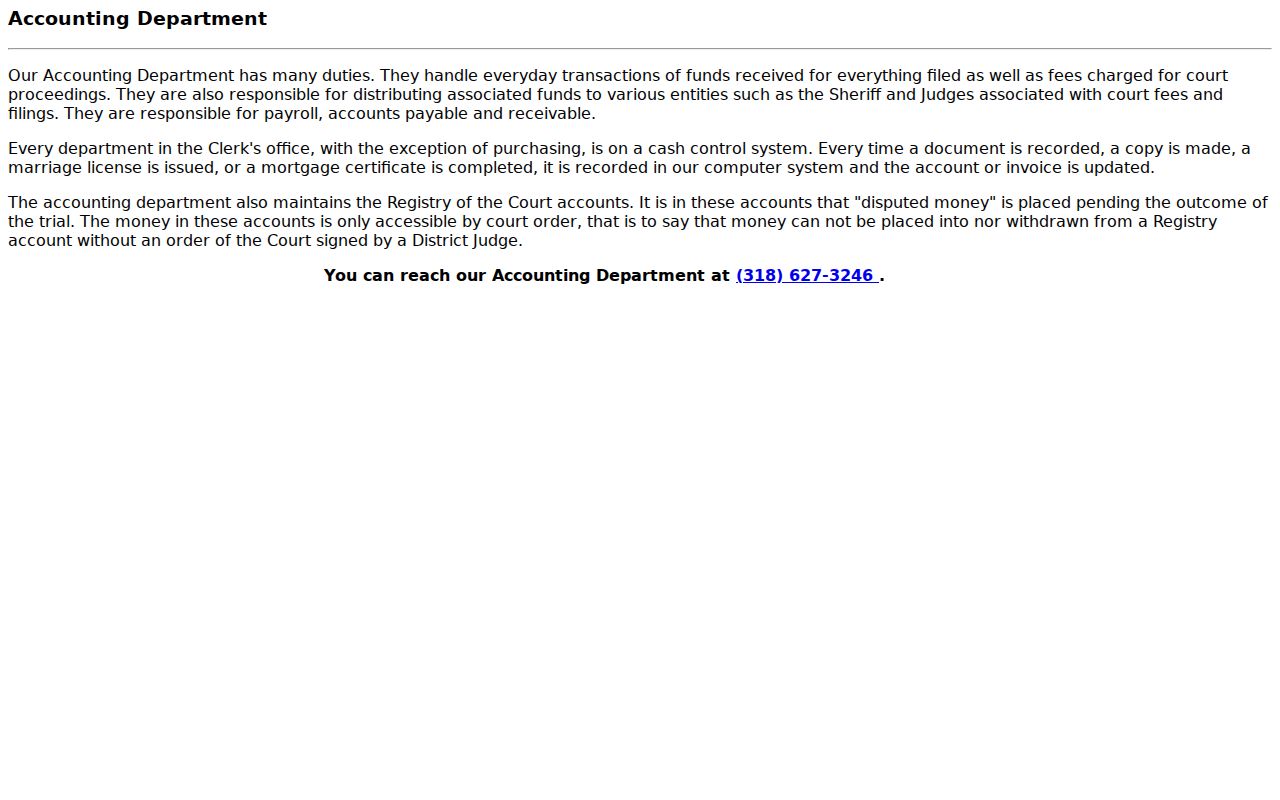
Accounting and registry work sits apart from a general docket search. Separate court-order conditions or fees can apply.
Kinds of Court Records
Court records come in many shapes in Grant Parish. A docket is a running index of the case. A minute entry is a dated outline of what happened in court. You may also run into petitions, bills of information, indictments, motions, and orders. Judgments, citation images, exhibits, transcripts, and certifications round out the list. Each one does a different job. The type matters when you ask for a copy. A transcript, for instance, is its own verbatim record if one exists. A portal image or a screen view is not a certified court copy. Treat those as leads rather than the real thing.
Ask for what you need with some precision. In a civil file, that means the case caption and the party names. Add the filing year, the document name, and the event date. In a criminal file, give the case number, the date, and the item you want. For a traffic ticket, include the citation number and the issuing agency. Include the court and the appearance date too. A narrow request routes faster. It is also less likely to pull in material that access limits cover.
Grant Parish Clerk Department Routing
Route your request by where the record began. Civil keeps suits, probate, Minute Book entries, filings, and exhibits. Criminal holds charging papers, minutes, motions, and orders. Traffic images citations from district court. Juvenile, Research, and Accounting each keep their own Grant Parish court docket material as well.
| Department | Example request | Key detail to supply |
|---|---|---|
| Civil | Pleading, Minute Book entry, succession document | Caption, case number, filing or hearing date. |
| Criminal | Minute, indictment, order, judgment | Case number, event date, document type. |
| Traffic | Citation image or traffic minute | Citation number, issuer, court, date. |
| Research | Historical civil or property-related item | Name, year range, book/page or instrument if known. |
A Grant Parish Clerk department can explain its procedures. It cannot give legal advice or decide a case.
Court Records: What They Contain
Different court records exist because courts do different jobs. A court calendar can hand you a future date and setting. A civil index can list the parties, a document number, its type and date, and the parish. It may also carry a description. A qualifying criminal docket search result may go further. It can show a case number, filing date, charge, arrest date, parish, and dated minute text. Remember that an index only identifies a filing. The Clerk's paper or image file is where the actual document sits.
| Docket | A running procedural list or case index, often used to locate events and numbers. |
|---|---|
| Minute entry | A dated outline of court action, not a verbatim transcript. |
| Pleading or motion | A filed document identified by its title and filing date. |
| Judgment or order | A court action document that may need certification. |
| Certification | A Clerk-authenticated copy distinct from an ordinary image or printout. |
Name the exact record you need. One minute, filing, order, or citation image beats a bulk request. Vague asks slow every Grant Parish case lookup down.
Grant Parish Record Request Fields
Prepare before calling or visiting. The Clerk needs enough to find a file without a broad description. Use the fields below and add a callback number in case the office must clarify the record or payment.
- Court and department: 35th JDC Civil, Criminal, Traffic, Juvenile, Accounting, or Research.
- Case, citation, instrument, or docket number.
- Caption or style, party names, and helpful alternate spellings.
- Approximate filing, arrest, hearing, or event date.
- Record type, such as minute, motion, order, judgment, exhibit, citation image, transcript, or certification.
- Whether a plain, conformed, or certified copy is required, plus preferred delivery method.
Offer to pay current copying, certification, research, or image charges. The Clerk can also tell you whether a record is restricted or in another court's custody and so needs more than ordinary request information.
Copy Fees and Certification
The Grant Parish Clerk's fee schedule splits its charges into separate buckets. Plain copies run $1 per page. Court minutes cost $10 per date, and certification adds $5. A different schedule governs certified copies. Those run $10 each, with $5 for conformed copies and $2 per page for exhibits. The fee list is dated 2026-08-25, so confirm amounts with the Clerk before sending payment.
| Listed item | Amount | Important distinction |
|---|---|---|
| Criminal copy | $1 per page | Copy cost, not a filing fee. |
| Court minutes | $10 per date | Use the event date when possible. |
| Criminal certification add-on | $5 | Added to the relevant record copy. |
| Certified copy | $10 | Separate listed probate/copy category. |
| Conformed copy | $5 | Not the same as certification. |
Certification and filing are two separate services. Ask the agency, court, or organization that will receive the copy exactly what form it needs, then tell the Clerk that requirement when you make the request.
Grant Parish Court Copy Types
Grant Parish court copies come in a few forms. A plain copy is just an ordinary reproduction. A conformed copy sits in its own category. The Clerk recognizes it in the official fee data. A certified copy carries the Clerk's certification. Ask for it whenever an authenticated form is specifically required. Keep in mind that an online image or screen capture can help you spot a filing. Downloading it does not turn it into a certified court record.
When you request a copy, put the case number, document title, date, and copy type in one request. For a minute entry, include the exact court date. For a judgment, give the judgment date. For an exhibit, ask first whether it is available. Ask as well whether any copying or access limit applies. All of this saves the Clerk from guessing which item you mean.
The Louisiana Clerks' Remote Access Authority overview lays out the statewide framework. It governs remote access to these records.
Statewide access tools can help you find what exists. The Clerk's copy and certification process, in turn, sets the official form of the record you actually receive.
Access Rules for Court Records
Code of Civil Procedure Art. 251 names the district-court Clerk as custodian. Under Louisiana R.S. 44:31, public records are open by default. Anyone may inspect, copy, or reproduce them unless a law limits access. R.S. 44:33 spells out the custodian's availability duties within that statutory framework.
Access limits remain important. These laws do not remove restrictions for juvenile or adoption files, sealed material, protected identifiers, exhibits, registry funds, or records covered by a court order. Ask the relevant custodian what authorization or procedure applies to the record requested.
A partial docket entry does not tell the whole story. Verify any record directly with the office that maintains it before drawing conclusions.
Grant Parish Historical Court Records
Grant Parish court records go back a long way. The Clerk's Research Department indexes property records to 1843. Originals, microfilm, and electronic imaging all back the collection. Staff also help the public with civil, probate, mortgage, conveyance, marriage, and military records. This is historical work, not a current court-docket search. For older Grant civil and property material, though, this is the right door to knock on.
Before you request anything, gather the details that speed up a search. A name helps. So does an approximate year range, a record family, and any instrument or book-and-page reference you have. Not every file survives in every form. Images can be incomplete, and some items fall under a special purchase or copy process. Ask about the form you need. It may exist as an index, an original, a microfilm image, or a certified copy.
The official page of the department spells out these services and what the staff can pull for you.
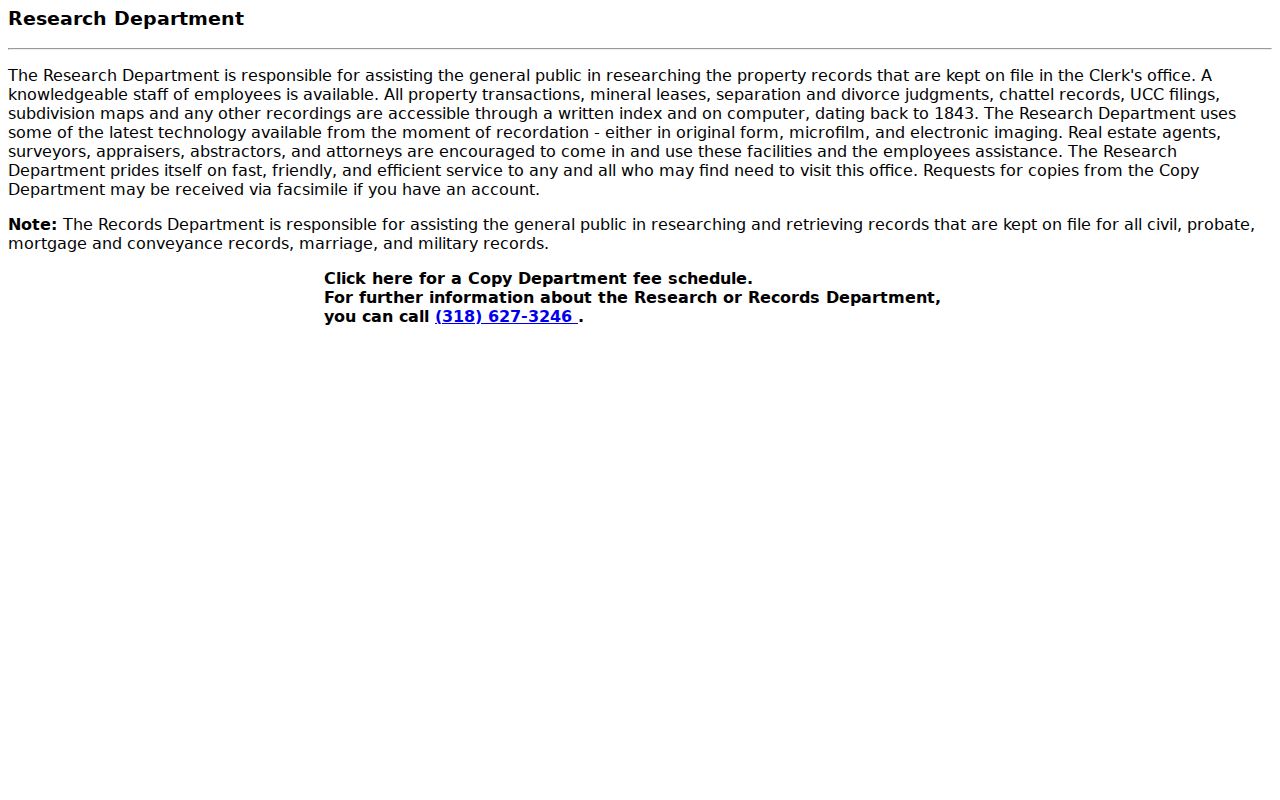
That historical scope sets the department apart from a current 35th JDC hearing calendar or a criminal-minute query. Think of it as the route for old Grant Parish files, not live court dates.
Grant Parish Online and Contact Routes
Several online routes can answer a Grant Parish question without a trip to the courthouse. For qualifying criminal cases, eClerks Criminal Search may return case and minute details. For supported civil, probate, marriage, and land material, use the statewide or parish eClerks searches. The 35th JDC docket PDF is the source for current court dates. It is not a full record database. Sometimes you need more. A copy, a certification, a historical record, a traffic file, or a missing item calls for one extra step. Follow the online step with a call to the Clerk.
Pick up the phone when an online route does not answer the question. The court does not publish one universal process. No single public terminal, counter process, or email acceptance covers every record category. Confirm the method and location the Clerk wants. Do that before sending an in-person or mail request.
The LCRAA statutory authority source sets out the law that governs these electronic access routes.
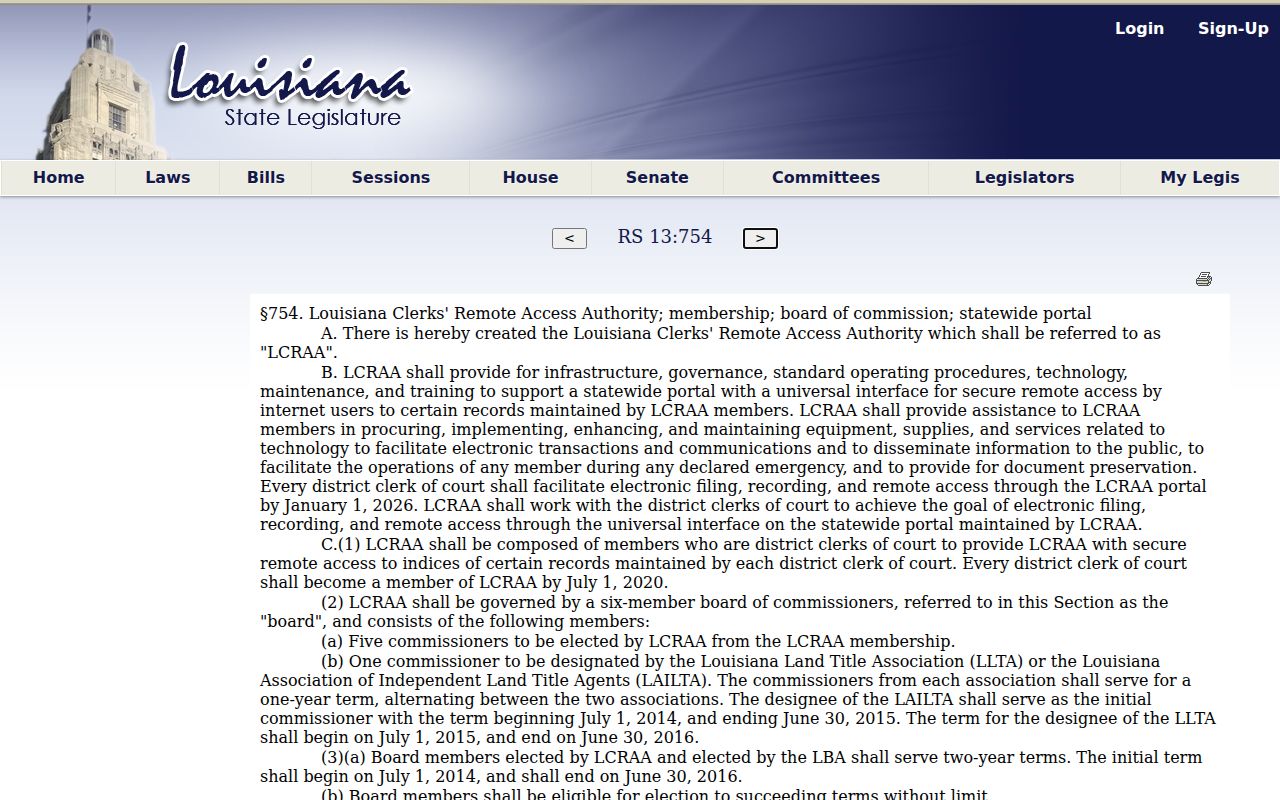
The statewide framework keeps electronic access moving forward. Even so, it does not create a single public Grant Parish search that covers every court file.
Grant Parish Restricted Record Requests
Not every Grant Parish record is open. The Juvenile Department states that all juvenile filings are confidential. Viewing proceedings takes a valid court order. Adoption records also require a court order. Beyond those, restrictions can cover sealed civil or criminal matters, protected personal information, exhibits, and registry records. So a refusal is sometimes a lawful access boundary rather than a missing filing.
Children's Code Art. 412 sets out the confidentiality rules for juvenile matters.
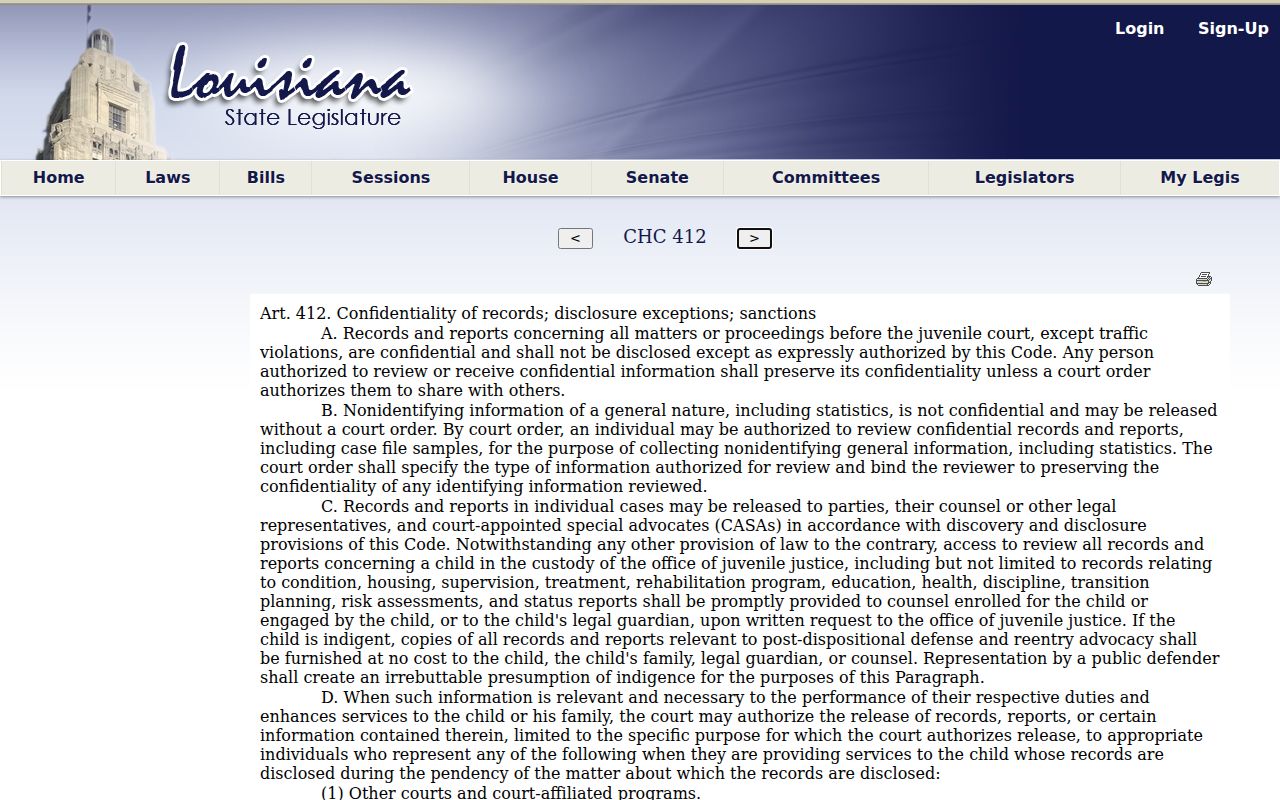
For a restricted category, ask the Court or Clerk what order, authorization, or identity information is required. Assume no online search can bypass the restriction on its own.